Amenorrhea is a menstrual condition characterized by absent menstrual periods for more than three monthly menstrual cycles, and may be classified as primary or secondary. Primary amenorrhea occurs when menstruation fails to start puberty; secondary amenorrhea is due to some physical cause and usually occurs after normal periods have begun but become increasingly irregular or absent. It is one of many conditions sometimes caused by hormone irregularities, which can be labeled by the more general term, Dysfunction Uterine Bleeding – DUB.
Ovulation abnormalities are usually the cause of very irregular or frequently missed menstrual periods. If a young woman has not started to menstruate by the age of 16 then a birth defect, anatomical abnormality, or other medical condition may be suspected.
Diagnosis begins with a gynecologist evaluating a patient’s medical history and a complete physical examination including a pelvic examination. A diagnosis of amenorrhea can only be certain when the physician rules out other menstrual disorders, medical conditions, or medications that may be causing or aggravating the condition. In addition, a diagnosis of amenorrhea requires that a woman has missed at least three consecutive menstrual cycles, without being pregnant. Young women who have not had their first menstrual period by the age of 16 should be evaluated promptly: making an early diagnosis and starting treatment as soon as possible is very important.
Specific treatment for amenorrhea will be determined by your doctor based on what is believed to be the cause. Most of the conditions that cause secondary amenorrhea will respond to treatment. In most cases, doctors will induce menstruation in non-pregnant women who have missed two or more consecutive menstrual periods, because of the danger posed to the uterus if the non-fertilized egg and endometrium lining are not expelled. Without this monthly expulsion, the risk of uterine cancer increases.
Signs, symptoms & indicators of Amenorrhea
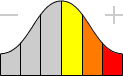
Unexplained missed periods
Counter Indicators
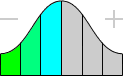
Unexplained missed periods in past
Conditions that suggest Amenorrhea
Being/being post/being peri menopausal
Risk factors for Amenorrhea
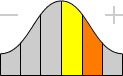
Overtraining, Effects
Many young female athletes in training experience absent menstrual cycles due to low body fat content. Exercising women with regular menstrual cycles and amenorrheic women who do not exercise excessively demonstrate a clear diurnal rhythm of leptin levels. Exercising women with amenorrhea lose this normal rhythm, which raises the possibility that this cycle is important for the maintenance of reproductive function. Leptin levels normally rise during the afternoon and reach a peak in the early hours of the morning, then decline towards dawn.
For some women, simply explaining the need for adequate calorific intake to match energy expenditure results in increased intake and/or reduced exercise, and their menses resume. For those women in whom no other cause of amenorrhea can be found, but who are unable or unwilling to either increase food intake or decrease the amount of exercise, estrogen replacement therapy is strongly indicated. Appropriate therapy consists of any estrogen replacement regimen that includes endometrial protection.
Hypothyroidism
In many cases, an underactive or overactive thyroid gland is responsible for the absent menstrual cycles.
Hyperprolactinemia
High prolactin levels can often cause amenorrhea.
Problem Caused By Being Overweight
Women who are obese often experience amenorrhea as a result of excess fat cells interfering with the process of ovulation. Also, according to a 2002 study, nearly 30% of obese women with PCOS had amenorrhea. (The rate was lower (4.7%) in women with normal weight.) In PCOS, increased androgen production produces high LH levels and low FSH levels, so that follicles are prevented from producing a mature egg.
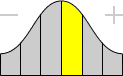
Anorexia / Starvation Tendency
Women with anorexia and/or bulimia often experience amenorrhea as a result of maintaining a body weight that would be too low to sustain a pregnancy. As a result, as a form of protection for the body, the reproductive system shuts down because it is severely malnourished.
Bulimic Tendency
Women with anorexia and/or bulimia often experience amenorrhea as a result of maintaining a body weight that would be too low to sustain a pregnancy. As a result, as a form of protection for the body, the reproductive system shuts down because it is severely malnourished.
Polycystic Ovary Syndrome (PCOS)
In many women with polycystic ovaries, menstruation begins at the normal age. After a year or two of regular menstruation, the periods become highly irregular and then infrequent.
Amenorrhea suggests the following may be present
Overtraining, Effects
Many young female athletes in training experience absent menstrual cycles due to low body fat content. Exercising women with regular menstrual cycles and amenorrheic women who do not exercise excessively demonstrate a clear diurnal rhythm of leptin levels. Exercising women with amenorrhea lose this normal rhythm, which raises the possibility that this cycle is important for the maintenance of reproductive function. Leptin levels normally rise during the afternoon and reach a peak in the early hours of the morning, then decline towards dawn.
For some women, simply explaining the need for adequate calorific intake to match energy expenditure results in increased intake and/or reduced exercise, and their menses resume. For those women in whom no other cause of amenorrhea can be found, but who are unable or unwilling to either increase food intake or decrease the amount of exercise, estrogen replacement therapy is strongly indicated. Appropriate therapy consists of any estrogen replacement regimen that includes endometrial protection.
Problem Caused By Being Overweight
Women who are obese often experience amenorrhea as a result of excess fat cells interfering with the process of ovulation. Also, according to a 2002 study, nearly 30% of obese women with PCOS had amenorrhea. (The rate was lower (4.7%) in women with normal weight.) In PCOS, increased androgen production produces high LH levels and low FSH levels, so that follicles are prevented from producing a mature egg.
Amenorrhea can lead to
Osteoporosis / Risk
Amenorrhea associated with reduced estrogen levels increases the risk for osteoporosis (loss of bone density). This is may be particularly dangerous from amenorrhea that occurs in young female athletes and those with eating disorders. Because bone growth is at its peak in adolescence and young adulthood, losing bone density at that time is very dangerous, and early diagnosis and treatment is essential for long-term health.
Recommendations for Amenorrhea

Vitex
In this study, a chasteberry preparation was used in a study of 3,162 women to assess the effectiveness of vitex for corpus luteum insufficiency. 77.4% had menstrual cycle disturbances of various types and the others suffered from a range of gynecological problems which included symptoms of corpus luteum insufficiency. The average length of treatment was 5 months. Hormone cytology and symptoms were used to assess the treatment.
The women reported the treatment as completely effective (33%), significant improvement (55%), and no change (7%). Their doctors reported very good results in 68% of cases, adequate in 22%, and no change in 7%. [Tjherapiewoche, 1993, 43(48): pp.2577-80]
In another study, 20 women with secondary amenorrhea took a chasteberry extract for 6 months. Lab testing was done to measure progesterone, FSH, and LH, and pap smears were done at the beginning of the study, at 3 months, and at 6 months. At the end of the study, the researchers were able to evaluate 15 of the women. Ten out of the 15 women had a return of their menstrual cycles. Testing showed that values for progesterone and LH increased, and FSH values either did not change or decreased slightly. [Gynakol Praxis, 1990, 14(3): pp.489-95]
In a third study, 18 women with abnormally low progesterone levels were given vitex daily. After 3 months of treatment, 13 showed increases in progesterone and 2 became pregnant. [Zeitscchrift Fur Allgemein, 1987, 63: pp.932-3]


Test / Monitor Hormone levels
Comprehensive sex hormone testing is important in discoverying the underlying cause of amenorrhea. This can involve testing for LH and FSH along with estrogen, progesterone and prolactin.
Key
| Weak or unproven link |
| Strong or generally accepted link |
| Proven definite or direct link |
| Very strongly or absolutely counter-indicative |
| May do some good |
| Likely to help |
| Highly recommended |
Glossary
Hormones
Chemical substances secreted by a variety of body organs that are carried by the bloodstream and usually influence cells some distance from the source of production. Hormones signal certain enzymes to perform their functions and, in this way, regulate such body functions as blood sugar levels, insulin levels, the menstrual cycle, and growth. These can be prescription, over-the-counter, synthetic or natural agents. Examples include adrenal hormones such as corticosteroids and aldosterone; glucagon, growth hormone, insulin, testosterone, estrogens, progestins, progesterone, DHEA, melatonin, and thyroid hormones such as thyroxine and calcitonin.
DUB
Dysfunctional Uterine Bleeding (DUB) is any abnormality of menstruation or bleeding caused by a hormonal disorder. DUB is a diagnosis of exclusion. The following conditions should be ruled out in order to diagnose DUB: endometrial polyps, uterine fibroids, adenomyosis, endometrial or cervical cancer, pelvic infection including endometritis (infection of the lining of the uterus), endometriosis, polycystic ovarian disease, ovarian cyst or tumor, thyroid dysfunction or blood clotting abnormalities. Hormone testing may indicate abnormalities which replacement therapy would then resolve. If the dysfunctional bleeding disappears, then no further testing may be necessary. Failure to perform sufficient testing may result in an incorrect diagnosis of DUB because the true cause of the abnormal bleeding has been overlooked. A premature diagnosis of DUB may lead to improper and failed treatment. DUB accounts for approximately 20% of all hysterectomies in the U.S.
Cancer
Refers to the various types of malignant neoplasms that contain cells growing out of control and invading adjacent tissues, which may metastasize to distant tissues.
Estrogen
One of the female sex hormones produced by the ovaries.
Thyroid
Thyroid Gland: An organ with many veins. It is at the front of the neck. It is essential to normal body growth in infancy and childhood. It releases thyroid hormones - iodine-containing compounds that increase the rate of metabolism, affect body temperature, regulate protein, fat, and carbohydrate catabolism in all cells. They keep up growth hormone release, skeletal maturation, and heart rate, force, and output. They promote central nervous system growth, stimulate the making of many enzymes, and are necessary for muscle tone and vigor.
Prolactin
An anterior pituitary peptide hormone that initiates and maintains lactation.
Androgen
Any steroid hormone that increases male characteristics.
Anorexia Nervosa
An eating disorder characterized by excess control - a morbid fear of obesity leads the sufferer to try and limit or reduce their weight by excessive dieting, exercising, vomiting, purging and use of diuretics. Sufferers are typically more than 15% below the average weight for their height/sex/age and typically have amenorrhea (if female) or low libido (if male). 1-2% of female teenagers are anorexic.
Bulimia Nervosa
An eating disorder characterized by lack of control - abnormal eating behavior including dieting, vomiting, purging and particularly bingeing that is usually associated with normal weight or obesity (unlike anorexics, who tend to be considerably underweight). The syndrome is associated with guilt, depressed mood, low self-esteem and sometimes with childhood sexual abuse, alcoholism or promiscuity.
Osteoporosis
A disease in which bone tissue becomes porous and brittle. The disease primarily affects postmenopausal women.