Cardiomyopathy refers to abnormalities of the structure or function of the heart muscle. There are 3 major types of cardiomyopathy: dilated congestive, hypertrophic, and restrictive. The most commonly encountered form is dilated congestive cardiomyopathy (DCM). In this type of cardiomyopathy, the heart muscle is damaged, commonly as a result of coronary artery disease, and gradually loses its efficiency as a pump.
DCM can be triggered by diabetes, alcohol abuse, infections, exposure to certain drugs and toxins, nutritional deficiencies, connective tissue diseases, hereditary disorders, and pregnancy. Although rare in developed countries, protein-calorie malnutrition may cause cardiomyopathy. Cardiomyopathy is a serious health condition and requires expert medical care.
Restrictive cardiomyopathy is usually due to a connective tissue disease, cancer, or an autoimmune condition. Both hypertrophic and restrictive cardiomyopathies are relatively uncommon.
Conditions that suggest Cardiomyopathy
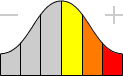
Having mild/having/having advanced cardiomyopathy
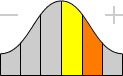
Enlarged heart
Counter Indicators
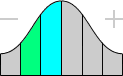
Absence of enlarged heart
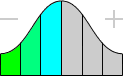
Absence of cardiomyopathy
Risk factors for Cardiomyopathy
Alcohol-related Problems
Cardiomyopathy occurs with greater frequency in people who drink too much alcohol. The risk of developing DCM is greater for female than for male alcoholics. [JAMA 1995;274(2): pp.149-54] Alcoholics can develop a form of thiamine deficiency called wet beri beri or Shoshin beri beri, which frequently includes cardiomyopathy.
Hypertension
Hypertrophic cardiomyopathy is usually a hereditary disorder, although incidence of this form of cardiomyopathy may also be higher in people with hypertension. [Hypertension 1994;24(5): pp.585-90]
Cigarette Smoke Damage
The risk of being diagnosed with cardiomyopathy goes up with the number of cigarettes smoked per day. Although there is room for controversy, all doctors recommend that smokers with DCM quit smoking.
Mercury Toxicity / Amalgam Illness
Mercury levels in the heart tissue of individuals who died from Idiopathic Dilated Cardiomyopathy (IDCM) were found to be on average 22,000 times higher than in individuals who died of other forms of heart disease. [J Amer Coll Cardiology v33(6) pp.1578-1583,1999]
Zinc Requirement
Comparing 54 subjects with idiopathic dilated cardiomyopathy, with healthy matched controls, it was found that patients with dilated cardiomyopathy had higher levels of serum copper and lower levels of serum zinc than healthy controls, and no difference in magnesium levels. [Biol Trace Elem Res. 2003;95: pp.11-17]
Diabetes Type II
People with diabetes have been reported to be at increased risk for being diagnosed with DCM.
Cardiomyopathy suggests the following may be present
Mercury Toxicity / Amalgam Illness
Mercury levels in the heart tissue of individuals who died from Idiopathic Dilated Cardiomyopathy (IDCM) were found to be on average 22,000 times higher than in individuals who died of other forms of heart disease. [J Amer Coll Cardiology v33(6) pp.1578-1583,1999]
Zinc Requirement
Comparing 54 subjects with idiopathic dilated cardiomyopathy, with healthy matched controls, it was found that patients with dilated cardiomyopathy had higher levels of serum copper and lower levels of serum zinc than healthy controls, and no difference in magnesium levels. [Biol Trace Elem Res. 2003;95: pp.11-17]
Magnesium Requirement
Myocardial magnesium was measured in 8 young patients (mean age 32) with ventricular tachycardia of less than 30 seconds in duration who underwent endomyocardial biopsy. Histologically, 4 had myocarditis and 1 had right-ventricular dysplasia. The other 3 patients had a cardiomyopathy with electron microscopic findings consistent with intracellular calcium overload, possibly due to reduced intracellular magnesium. Myocardial magnesium content was lower in the 4 with cardiomyopathic and dysplastic lesions than in the 4 with inflammatory lesions (myocarditis) and 8 controls. 10gm magnesium over 24 hours caused a resolution of ventricular tachycardias and a greater than 80% reduction in ventricular extrasystoles. No response was seen in the 4 patients with inflammatory lesions. [Lancet: 1019, 1987]
Another study comparing patients with cardiomyopathy against controls found no difference in magnesium levels. [Biol Trace Elem Res. 2003;95: pp.11-17] How magnesium levels were measured is uncertain.
Recommendations for Cardiomyopathy

L-Carnitine
There is a little evidence that carnitine may be useful in cardiomyopathy. [J Child Neurol (Canada) 10: pp.2S45-2S51, 1995] A deficiency of carnitine is associated with the development of some forms of cardiomyopathy. Inherited forms of cardiomyopathy seen in children may be the most responsive to therapy with L-carnitine. Will carnitine supplementation help the average person with cardiomyopathy? While it remains unknown, some doctors recommend up to 3gm of carnitine per day for the average adult. Carnitine is thought to work well with CoQ10, the two treatments being often combined.
Carnitine deficiency may also be implicated in diabetic cardiomyopathy [ J Diabetes Complications 1999 Mar-Apr;13(2):86-90.]

Arjun (Terminalia arjuna)
Arjun has been shown to improve the signs, symptoms and objective measurements of cardiomyopathy. A clinical trial using 500mg of an extract tid for DCM patients with severe heart failure showed improvement in heart function within 2 weeks and improvement which continued for the following 2 years. The arjun in this trial was concentrated, but not standardized, as are some commercial preparations (1% arjunolic acid).[Int J Cardiol 1995;49: pp.191-9]
Hawthorn (Crataegus oxycantha)
Hawthorn can be an effective therapy for congestive heart failure, which is the main complication of cardiomyopathy. The clinical trials with heart failure patients have demonstrated efficacy using 80-300mg per day of standardized extract of hawthorn per day (containing > 2% vitexins). A study of cardiomyopathy and hawthorn has yet to be done.
Coleus (Coleus forskohlii)
Forskolin, found in coleus, may help dilate blood vessels and improve the forcefulness with which the heart pumps blood. A preliminary trial found that intravenous forskolin reduced blood pressure and improved heart function in people with cardiomyopathy. [Arzneim Forsch 1987;37: pp.364-7] It is unknown if oral coleus extracts would have the same effect, but some herbalists suggest taking 200-600mg orally per day of a 10% forskolin extract.
Alcohol Avoidance
Many doctors suggest that individuals with cardiomyopathy abstain from alcohol consumption. People with alcohol-induced cardiomyopathy who avoid alcohol may regain their health.

Aerobic Exercise
Heavy physical activity can be life-threatening for cardiomyopathy patients. However, appropriate physician supervised exercise often benefits individuals with cardiomyopathy.

CoQ10 (Ubiquin-one/ol)
Pioneering trials of CoQ10 in cases of heart failure involved primarily patients with dilated weak heart muscle of unknown cause (idiopathic dilated cardiomyopathy). CoQ10 was added to standard treatments for heart failure such as fluid pills (diuretics), digitalis preparations, and ACE inhibitors. Several trials involved the comparison between supplemental CoQ10 and placebo on heart function as measured by echocardiography. CoQ10 was given orally in divided doses as a dry tablet chewed with a fat-containing food or an oil-based gel cap swallowed at mealtime.
Heart function, as indicated by the fraction of blood pumped out of the heart with each beat (the ejection fraction), showed a gradual and sustained improvement in tempo with a gradual and sustained improvement in patients’ symptoms of fatigue, shortness of breath, chest pain and palpitations. The degree of improvement was occasionally dramatic with some patients developing a normal heart size and function on CoQ10 alone. Most of these dramatic cases were patients who began CoQ10 shortly after the onset of congestive heart failure. Patients with more established disease frequently showed clear improvement but not a return to normal heart size and function.
A few studies, however, have found no benefit from CoQ10 supplementation in treating people with cardiomyopathy. Despite a partial lack of consistency in the outcomes of published research, most holistic doctors recommend 100-150mg per day taken with meals.
Coenzyme Q10 has also been shown to improve cardiac function in people with hypertrophic cardiomyopathy – a less common form of cardiomyopathy. [Am Heart J 1996;132(Pt 1): pp.61-70]
Key
| Weak or unproven link |
| Strong or generally accepted link |
| Proven definite or direct link |
| Strongly counter-indicative |
| Very strongly or absolutely counter-indicative |
| May do some good |
| Likely to help |
| Highly recommended |
| May have adverse consequences |
Glossary
Congestive
Pertaining to accumulation of blood or fluid within a vessel or organ.
DCM
Dilated Congestive Cardiomyopathy, the most common type of cardiomyopathy.
Diabetes Mellitus
A disease with increased blood glucose levels due to lack or ineffectiveness of insulin. Diabetes is found in two forms; insulin-dependent diabetes (juvenile-onset) and non-insulin-dependent (adult-onset). Symptoms include increased thirst; increased urination; weight loss in spite of increased appetite; fatigue; nausea; vomiting; frequent infections including bladder, vaginal, and skin; blurred vision; impotence in men; bad breath; cessation of menses; diminished skin fullness. Other symptoms include bleeding gums; ear noise/buzzing; diarrhea; depression; confusion.
Cancer
Refers to the various types of malignant neoplasms that contain cells growing out of control and invading adjacent tissues, which may metastasize to distant tissues.
Autoimmune Disease
One of a large group of diseases in which the immune system turns against the body's own cells, tissues and organs, leading to chronic and often deadly conditions. Examples include multiple sclerosis, rheumatoid arthritis, systemic lupus, Bright's disease and diabetes.
Thiamine
(Vitamin B-1): A B-complex vitamin that acts as a coenzyme necessary for the conversion of carbohydrates into glucose, which is burned in the body for energy. It is essential for the functioning of the nervous system.
Hypertension
High blood pressure. Hypertension increases the risk of heart attack, stroke, and kidney failure because it adds to the workload of the heart, causing it to enlarge and, over time, to weaken; in addition, it may damage the walls of the arteries.
Idiopathic
Arising spontaneously or from an obscure or unknown cause.
Serum
The cell-free fluid of the bloodstream. It appears in a test tube after the blood clots and is often used in expressions relating to the levels of certain compounds in the blood stream.
Copper
An essential mineral that is a component of several important enzymes in the body and is essential to good health. Copper is found in all body tissues. Copper deficiency leads to a variety of abnormalities, including anemia, skeletal defects, degeneration of the nervous system, reproductive failure, pronounced cardiovascular lesions, elevated blood cholesterol, impaired immunity and defects in the pigmentation and structure of hair. Copper is involved in iron incorporation into hemoglobin. It is also involved with vitamin C in the formation of collagen and the proper functioning in central nervous system. More than a dozen enzymes have been found to contain copper. The best studied are superoxide dismutase (SOD), cytochrome C oxidase, catalase, dopamine hydroxylase, uricase, tryptophan dioxygenase, lecithinase and other monoamine and diamine oxidases.
Zinc
An essential trace mineral. The functions of zinc are enzymatic. There are over 70 metalloenzymes known to require zinc for their functions. The main biochemicals in which zinc has been found to be necessary include: enzymes and enzymatic function, protein synthesis and carbohydrate metabolism. Zinc is a constituent of insulin and male reproductive fluid. Zinc is necessary for the proper metabolism of alcohol, to get rid of the lactic acid that builds up in working muscles and to transfer it to the lungs. Zinc is involved in the health of the immune system, assists vitamin A utilization and is involved in the formation of bone and teeth.
Magnesium
An essential mineral. The chief function of magnesium is to activate certain enzymes, especially those related to carbohydrate metabolism. Another role is to maintain the electrical potential across nerve and muscle membranes. It is essential for proper heartbeat and nerve transmission. Magnesium controls many cellular functions. It is involved in protein formation, DNA production and function and in the storage and release of energy in ATP. Magnesium is closely related to calcium and phosphorus in body function. The average adult body contains approximately one ounce of magnesium. It is the fifth mineral in abundance within the body--behind calcium, phosphorus, potassium and sodium. Although about 70 percent of the body's magnesium is contained in the teeth and bones, its most important functions are carried out by the remainder which is present in the cells of the soft tissues and in the fluid surrounding those cells.
Ventricular Tachycardia
Excessively rapid heart beat due to uncontrolled ectopic focus in the ventricle.
Biopsy
Excision of tissue from a living being for diagnosis.
Dysplasia
Abnormal development of tissue.
Calcium
The body's most abundant mineral. Its primary function is to help build and maintain bones and teeth. Calcium is also important to heart health, nerves, muscles and skin. Calcium helps control blood acid-alkaline balance, plays a role in cell division, muscle growth and iron utilization, activates certain enzymes, and helps transport nutrients through cell membranes. Calcium also forms a cellular cement called ground substance that helps hold cells and tissues together.
Gram
(gm): A metric unit of weight, there being approximately 28 grams in one ounce.